
Date: July 15, 2026
Read Time: 3.5 minutes
We all have a version of ourselves that lives in our heads. We think we sound confident, articulate, and perfectly structured.
Then, we see ourselves on camera.
In the modern job market, technical skills only get you through the screening round. The final decision almost always comes down to communication, presence, and how you handle pressure. This is exactly why generic interview tips don’t work—they don’t account for your specific, unconscious habits.
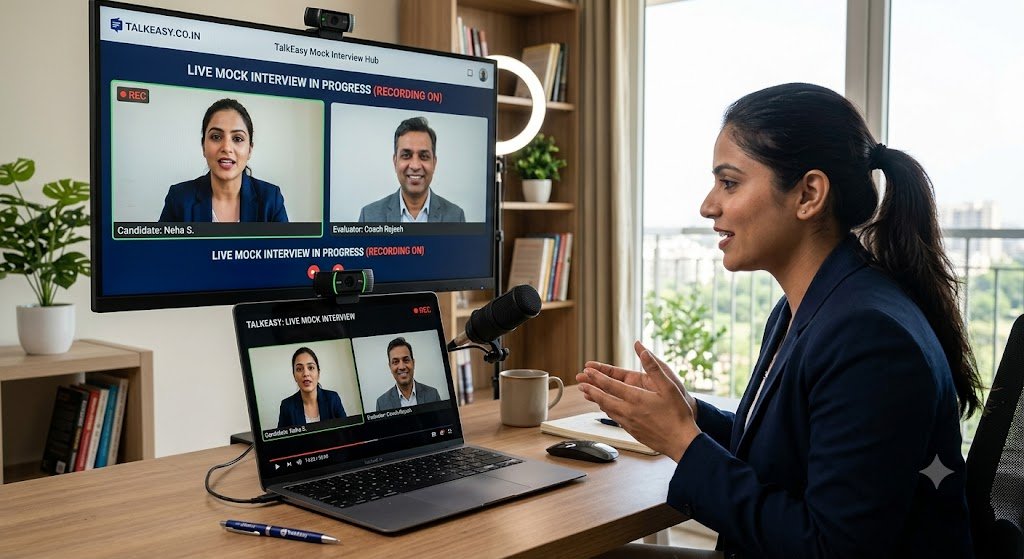
To truly master the art of the interview, you need to experience The Mirror Effect through recorded mock interviews. Here is why hitting the record button is the fastest way to upgrade your communication.
The Blind Spots We All Have
When you are speaking live in an interview, your brain is working on overdrive trying to retrieve data, recall past projects, and formulate the next sentence. You literally do not have the cognitive bandwidth to monitor how you are delivering the message.
When you review a recorded mock interview, you step out of the hot seat and become the evaluator. Instantly, your blind spots become obvious:
- The Filler Word Trap: You might think you used one or two “uhms” or “likes,” but the recording reveals you used them twenty times in three minutes.
- Body Language Mismatch: Your words say you are “highly enthusiastic about leadership,” but your slouching posture and lack of eye contact tell a completely different story.
- The Pacing Problem: Under stress, most people speak 30% faster than normal, causing their answers to blend together and lose impact.
Data-Driven Self-Correction
A recorded interview turns a subjective experience into objective data. You can physically measure your progress:
| Interview Metric | What the Recording Reveals | The Fix |
| Response Latency | Do you pause too long before answering, or interrupt the interviewer? | Practicing a structured 2-second breath before speaking. |
| Answer Structuring | Did you actually answer the question asked, or ramble for 4 minutes? | Using the STAR framework (Situation, Task, Action, Result) cleanly. |
| Tone & Intonation | Do you sound robotic and rehearsed, or conversational and authentic? | Modulating pitch to emphasize key achievements. |
The Power of the “Rewatch Loop”
The true value of a mock recording isn’t just watching it once; it’s the ability to pause, analyze, and re-record. By reviewing your performance alongside expert coaching feedback, you can pinpoint the exact timestamp where an answer lost its grip, rewrite the narrative, and try it again.
By the time you sit down for the actual, real-world interview, it won’t feel like a high-stakes test. It will feel like a script you’ve already mastered on screen.