
A Conversation Every HR Has Had — And Every Candidate Should Read
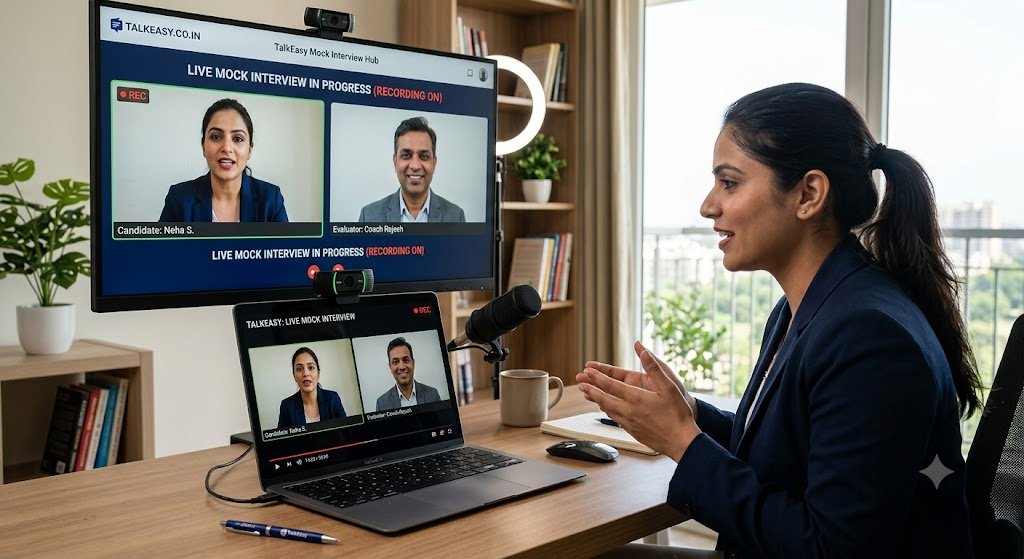
Picture this. A candidate walks into an interview. Good resume. Right skills. Relevant experience. Everything on paper says “hire me.”
Then the interview starts.
HR: Tell me about yourself.
Candidate: Myself Rohan, I am from Delhi, I have done engineering, I am… I am working in a company from 2 years… my role is… umm… I do coding work and also handling team sometimes…
HR: (thinking) Okay, let’s move on. Why do you want to leave your current job?
Candidate: Actually sir, my current company is not good, salary is also less, and boss is not treating good, so I want change.
HR: (thinking) Red flag. Never speak negatively about your current employer.
Somewhere in that room, a good candidate just got mentally filed under “weak communicator.” Not because he lacked skill. Not because he lacked experience. But because of how he said what he knew.
This happens more often than most people realize — on both sides of the table.
Now Watch the Same Interview, Done Right
Same candidate. Same experience. Same 2 years of work. Just better delivery.
HR: Tell me about yourself.
Candidate: Sure! I’m Rohan, a software developer with 2 years of experience in backend development. I currently lead a small team of 3 and have worked on projects that improved system performance by 30%. I’m looking for a role where I can take on bigger challenges and grow into a lead position.
HR: Great. Why do you want to leave your current job?
Candidate: I’ve learned a lot in my current role, but I’m looking for an environment with more ownership and opportunities to grow technically. This role feels like the right next step for that.
Same Rohan. Same skills. Same experience. Completely different outcome.
The gap between these two versions of Rohan isn’t knowledge. It’s structure, confidence, and knowing what not to say.
Why This Happens So Often
For most working professionals, this isn’t an English problem in the way people assume. It’s rarely about not knowing enough words.
It’s this: you think of the answer in your native language first, and then translate it into English while you’re speaking. That translation gap causes hesitation, broken sentences, and filler words like “umm” and “actually” — and interviewers read that hesitation as a lack of confidence or clarity, even when neither is actually missing.
The candidate isn’t underprepared. They’re just fighting their own head mid-sentence.
Common Mistakes Candidates Make in Interviews
- Starting with “Myself…” instead of “I’m…” — a small habit that instantly signals unpolished English to many interviewers.
- Speaking negatively about the current company or boss — regardless of how true it is, it raises concerns about attitude and professionalism.
- Rambling without structure — answers with no clear beginning, middle, and end are hard to follow, even when the content is good.
- Translating in the head before speaking — this is the single biggest cause of hesitation and broken English in interviews.
- Not connecting answers back to the role — candidates describe their past accurately but forget to link it to why they’re a fit for this job.
None of these mistakes are about intelligence or capability. They’re about delivery — and delivery is learnable.
What This Means for HR and Recruiters
If you’re on the hiring side, here’s the uncomfortable truth: some of the best candidates you’ve rejected in the past probably weren’t lacking skill. They were lacking the ability to present their skill under interview pressure.
Before writing someone off as a “weak communicator,” it’s worth asking: is this actually about their capability, or just about their delivery in that moment? Are you filtering for the right thing?
Talented people are being missed — not because they can’t do the job, but because they couldn’t say, in that one 45-minute window, that they can.
What This Means for Candidates
If you’ve ever walked out of an interview thinking “I knew the answer, I just couldn’t say it right” — this is not a rare experience. It’s one of the most common reasons good candidates get rejected.
The good news: this is completely fixable. It has nothing to do with being “good at English” in the traditional sense. It’s about learning how to structure your thoughts, stop translating in your head, and present what you already know with confidence.
Closing the Gap
This exact gap — between what candidates know and what they’re able to communicate under pressure — is what TalkEasy was built to close.
TalkEasy is a spoken English and interview coaching platform designed for working professionals, taught in a mix of English and your native language, because real learning happens when a concept is understood in your own language first. Only then can it be spoken confidently in another one.
If you’re a candidate preparing for your next interview, or an HR professional who wants to stop losing good talent to communication gaps — this is exactly the problem worth solving.
Want to fix this gap before your next interview — or help your team stop losing good candidates to it? Get in touch with TalkEasy.