
When an interviewer asks, “What is your greatest strength?”, it can feel like an invitation to brag. However, HR recruiters aren’t looking for arrogance or generic buzzwords like “I’m a hard worker” or “I’m a team player.”
They want to assess your self-awareness, confidence, and whether your core strengths match the specific requirements of the job.
In this guide, we break down how to pick the right strength, how to structure your response using the STAR method, and word-for-word sample answers.
What Recruiters Are Actually Testing
When hiring managers ask this question, they are evaluating three key factors:
- Relevance: Does your top strength directly solve a problem this role faces?
- Proof: Can you prove your strength with real-world examples and metrics?
- Self-Awareness: Do you understand how your skills create value for a team?
💡 Pro Tip: This question usually follows the opening icebreaker. If you are still working on your opening pitch, make sure to read our detailed guide on How to Answer “Tell Me About Yourself” in an Interview.
The Proven Formula: The STAR Framework
To keep your answer concise and impactful, use the STAR Method (Situation, Task, Action, Result):
1. STRENGTH: Name your core strength clearly (1 sentence).
2. SITUATION & TASK: Briefly set the context of a challenge you faced.
3. ACTION: Explain the specific steps you took using your strength.
4. RESULT: Share the measurable positive outcome.
Sample Answers for Different Roles
Example 1: Problem Solving & Initiative (For Tech/Product Roles)
“My greatest strength is proactive problem-solving under tight deadlines. In my previous role as a Software Engineer, our application experienced unexpected server downtime during a peak traffic event.
Instead of waiting for escalation, I immediately analyzed the log files, identified a database bottleneck, and wrote a patch script. As a result, we restored system uptime within 20 minutes, preventing an estimated ₹5 Lakhs in lost sales transactions.”
Example 2: Communication & Stakeholder Management (For HR/Management Roles)
“My core strength is empathetic communication and conflict resolution. While managing cross-functional teams, I often work with departments that have competing priorities.
During a recent project launch, marketing and engineering clashed over feature timelines. I organized a alignment workshop to re-prioritize the roadmap around core user needs. This helped both teams agree on a revised launch date, delivering the product on time with zero team burnout.”
Example 3: Adaptability & Quick Learning (For Freshers / Graduates)
“My greatest strength is my adaptability and eagerness to learn new tools quickly. During my final year internship, our team was transitioning from manual data tracking to a complex CRM tool that nobody on the intern team knew.
I spent my weekend taking online tutorials, built a simplified cheat sheet for the team, and helped onboard four other interns. We completed our quarterly data migration two weeks ahead of schedule.”
Common Mistakes to Avoid
- ❌ Listing too many strengths: Stick to one primary strength (or two closely related ones). Quantity dilutes your story.
- ❌ Giving a strength irrelevant to the role: If you are applying for an accounting role, highlighting “graphic design flair” doesn’t add value.
- ❌ Forgetting the numbers: Always try to attach a metric or tangible result to your story.
Master Your Interview Pitch
Knowing your strengths on paper is great, but speaking with steady confidence live in an interview takes practice.
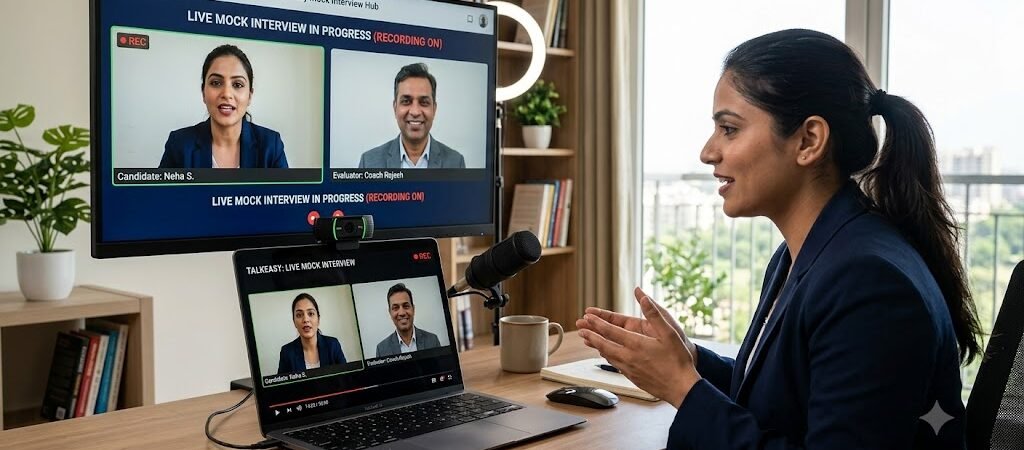
If you want personalized feedback on your interview answers, body language, and communication style, Book a 1-on-1 Mock Interview Session with TalkEasy today and get guided by expert HR recruiters.