You’ve polished your resume, tailored your cover letter, and finally scored an interview. Congratulations! But now comes the nerve-wracking part: standing out among a pool of equally qualified candidates.
Standard advice—like looking people in the eye, offering a firm handshake, or dressing neatly—is table stakes. Everyone does that. To turn an interview into an offer, you need actionable, high-leverage strategies that change the dynamics of the conversation.
Here are 7 unconventional job interview hacks that top performers use to win the room.
1. Flip the Dynamic with the “Diagnostic Switch”
Most candidates treat an interview like an interrogation: the interviewer asks questions, and the candidate scrambles to give the “right” answer.
Instead, position yourself as a consultant diagnosing a problem.
- How to do it: When asked a question about a challenge or scenario, answer it, then immediately bridge into diagnostic mode.
- What to say: “That’s how I handled it in my last role. I’m curious—is [specific issue] something your team is currently navigating right now?”
- Why it works: It shifts the dynamic from an evaluation to a collaborative working session. Interviewers love discussing their day-to-day challenges, and this instantly frames you as a peer rather than a subordinate.
2. Master the PAR Framework (Not Just STAR)
You’ve likely heard of the STAR method (Situation, Task, Action, Result). While useful, candidates often spend 80% of their time describing the Situation and Task, boring the interviewer with context.
Streamline your answers using the PAR framework:
[ Problem ] ➔ [ Action ] ➔ [ Result + Takeaway ]
- Problem (15%): State the hurdle clearly in 1–2 sentences.
- Action (60%): Focus heavily on what you specifically did (tools used, decisions made, obstacles overcome).
- Result + Takeaway (25%): Quantify the outcome with numbers, and add what you learned or how you’ve applied that insight since.
Pro Tip: If you can’t measure the result in revenue or time saved, measure it in efficiency, customer satisfaction, or team velocity.
3. Bring a “30-60-90 Day Plan”
Want to eliminate all doubt about whether you can do the job? Show them what your first three months look like before they even hire you.
You don’t need a 20-page document—a simple 1-page outline or presentation slide is incredibly persuasive.
| Phase | Core Focus | Key Actions |
| Days 1–30 | Learn & Observe | Onboard, audit current workflows, shadow team members, understand key pain points. |
| Days 31–60 | Align & Execute | Take ownership of core tasks, gather feedback on initial deliverables, identify low-hanging fruit. |
| Days 61–90 | Optimize & Scale | Propose process improvements, execute a standalone project, measure initial ROI. |
Bringing this to a final-round interview instantly separates you from 99% of applicants.
4. Use “Labeling” to Neutralize Your Weaknesses
Everyone dreads the “What’s your biggest weakness?” question or addressing a gap on their resume. Instead of using a humble-brag (“I work too hard”), use tactical empathy to control the narrative.
Preemptively address potential objections using labeling:
- Addressing a skill gap: “Looking at the job description, it seems like you’re looking for someone with heavy experience in SQL. While my primary background is in Python and data visualization, I’ve already completed a course on complex joins to bridge that gap quickly.”
- Addressing a career gap: “You might notice a 6-month gap on my resume. I took that time deliberately to upskill in product management and lead a volunteer project, which actually honed my project management skills in ways a standard role wouldn’t have.”
By naming the elephant in the room first, you take away its power.
5. Record Yourself with “The Elevator Mirror” Hack
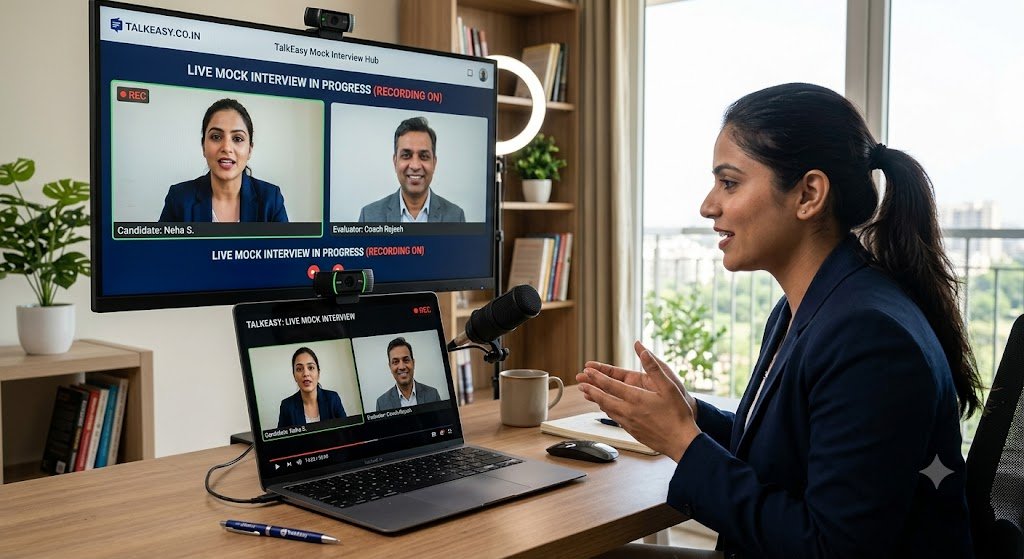
Practicing answers in your head is useless because your internal voice always sounds articulate. The real test is hearing how you talk under pressure.
- Turn on your phone’s camera or audio recorder.
- Pick 3 common behavioral questions (e.g., “Tell me about a time you failed”).
- Answer each in real time without pausing to edit yourself.
- Watch/listen back.
Pay attention to:
- Filler words (“um,” “like,” “you know”).
- Pacing (are you rushing because you’re nervous?).
- Clarity (did it take 3 minutes to make a 30-second point?).
Two practice recordings will improve your delivery more than hours of silent rehearsing.
6. Prime Your Energy Before Walking In (or Logging On)
Interviews trigger a fight-or-flight response. High cortisol levels make your answers rigid and restrict your natural personality.
To get into a high-status, relaxed flow state right before the call or meeting:
- Listen to music that shifts your state: Pick something upbeat that puts you in a confident mood 10 minutes prior.
- Do a physical reset: Shake out your hands, roll your shoulders, and take three slow belly-breaths (4 seconds in, 8 seconds out). This signals your nervous system that you are safe.
- Smile before you connect: Smiling—even forced—releases dopamine and instantly softens your tone of voice.
7. Close with the “Doubt Killer” Question
At the end of the interview, when they ask, “Do you have any questions for us?”, ask your strategic questions first, but wrap up with this powerful closer:
“Based on our conversation today, is there anything on my resume or in my background that gives you pause about moving me forward in this process?”
Why this works:
- It uncovers hidden objections: If they have a concern (e.g., “We weren’t sure about your remote management experience”), you get a immediate chance to address it before they make a decision.
- It shows immense confidence: It signals that you welcome feedback and aren’t afraid of direct communication.
- It leaves a lasting impression: Most candidates end with “When will I hear back?”—you end by proactively securing your candidacy.
Final Thoughts
An interview isn’t an exam where you sit back and hope to pass. It’s a two-way business discussion about whether there is a mutual fit to solve real problems together.
Pick 2 or 3 of these hacks to implement for your next interview, practice them beforehand, and watch how dramatically the room’s energy shifts in your favor. Good luck!