
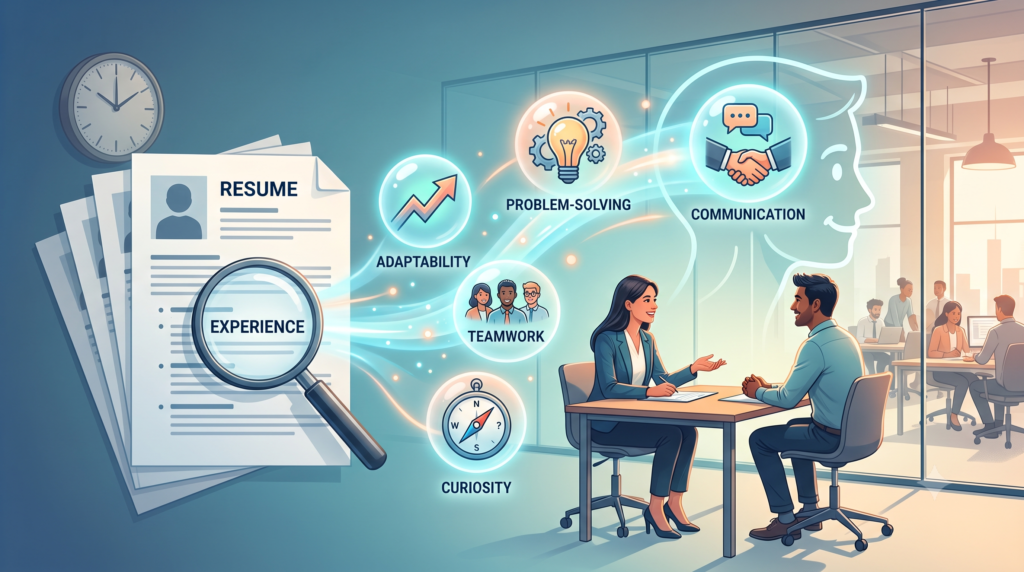
When a hiring process fails, we usually blame candidate performance. But what if the problem isn’t the candidate pool—what if it’s how the interview was conducted?
In today’s competitive talent market, top candidates are interviewing your company just as much as you are interviewing them. A clumsy, disorganized, or biased interview experience can cause elite talent to walk away—or leave you with a costly bad hire.
Whether you are an HR leader, founder, or hiring manager, here are 5 common interview mistakes to avoid to ensure you attract and retain the best talent.
1. “Winging It” Without Reviewing the Candidate’s Background
- The Mistake: Opening the resume 30 seconds before the call starts (or worse, during the call) and asking basic questions already written on their LinkedIn profile.
- Why It Hurts: Candidates immediately sense a lack of preparation and respect for their time. It forces the interview to stay surface-level rather than diving deep into their actual accomplishments.
- The Fix: Spend 5–10 minutes before the call mapping 2–3 targeted, role-specific questions based on their past project achievements or resume gaps.
2. Dominating the Conversation (The 80/20 Trap)
- The Mistake: Spending 40 minutes talking about the company, team goals, and job responsibilities, leaving the candidate with only 10 minutes to speak.
- Why It Hurts: You end the call feeling great because you talked a lot, but you gained zero meaningful data on whether the candidate can actually perform the job.
- The Fix: Follow the 80/20 Rule: The candidate should speak for 80% of the interview. Keep your intro under 5 minutes and save 10 minutes at the end for candidate questions.
3. Asking Predictable, Cliché Questions
- The Mistake: Relying on generic questions like “What is your biggest weakness?” or “Where do you see yourself in 5 years?”
- Why It Hurts: High-caliber candidates have memorized rehearsed answers to standard questions. You end up testing their memorization skills rather than their real-world problem-solving ability.
- The Fix: Use Behavioral & Situational Questions anchored in real company scenarios. For example: “Tell me about a time a project requirement changed 24 hours before launch. How did you handle it?”
4. Falling for the “Halo Effect” (Hiring for Likability Over Capability)
- The Mistake: Passing a candidate solely because you share a favorite sports team, hit it off instantly, or went to the same university.
- Why It Hurts: Likability does not equal competence. Unconscious bias often leads to hiring people who look or think like us, resulting in teams that lack diversity of thought and execution power.
- The Fix: Use a Structured Scorecard. Grade every candidate against identical, predefined criteria (Technical Competency, Problem Solving, Communication) before discussing personal impressions.
5. Slow Communication and “Ghosting”
- The Mistake: Taking 2–3 weeks to provide post-interview feedback or leaving candidates in the dark after an assignment.
- Why It Hurts: Top candidates move fast. Prolonged silence signals poor company culture, drives candidates to accept competing offers, and damages your employer brand on Glassdoor and LinkedIn.
- The Fix: Establish a strict internal policy: Feedback within 48 to 72 hours of every interview stage—whether moving forward or rejecting.
Summary Checklist for Hiring Teams
| Interview Phase | Do This ✅ | Avoid This ❌ |
| Pre-Interview | Review resume & map 3 targeted questions. | Skim resume during the call. |
| During Interview | Listen 80% of the time, test with real scenarios. | Oversell the company or ask cliché questions. |
| Post-Interview | Grade objectively on a scorecard & reply in 48 hours. | Rely on “gut feel” or leave candidates waiting. |
📩 Want to Elevate Your Hiring Process or Interview Performance?
At Talk Easy, we help organizations streamline their interview evaluation frameworks and coach job seekers to excel under pressure.
👉 Explore our specialized prep and coaching packages: